Looks like you're in [country-name]. Switch to the [site-name] for local equipment and services?

Go to [site-name]
Stay here

User account menu

  • 844.873.4948
  • English

    Australasia

    • Australia

    Europe

    • Français
    • Deutsch
    • English
    • Nederlands

    North America

    • English
    • Español
    • Français
  • Sign In / Register
United Rentals Home
  • Rent
    • All Equipment
    • Popular Rentals
    • Scissor Lifts
    • Boom Lifts
    • Telehandlers
    • Mini Excavators
    • Skid Steers & Track Loaders
    • Rental Resources
    • Rental Protection Plan (RPP)
    • Why Rent with United Rentals
  • Buy
    • All Used Equipment
    • Popular Used Equipment
    • Buy Forklifts
    • Buy Scissor Lifts
    • Buy Boom Lifts
    • Buy Mini Excavators
    • Buy Compressors
    • Buying Resources
    • Financing
    • United Guard™
  • Total Control
    • Account Dashboard
    • Invoices & Payments
    • Items On Rent
    • UR Mobile App
    • About Total Control®
  • Invoices & Payments
    • Invoices
    • Lien releases
    • Apply for credit
  • Locations
    • Find a Location
  • Training
    • Course Catalog
    • Training Credentials
    • United Academy
    • About United Academy
    • Care & Support
    • United Academy - Course Catalog
  • Solutions
    • Worksite Performance Solutions™
    • Specialty Solutions
      • Commercial Trucks
      • Flooring & Facility Solutions
      • Power & HVAC
      • Climate Solutions
      • Fluid Solutions
      • Trench Safety
      • Reliable Onsite Services
      • Tool Solutions
      • Storage Containers & Mobile Offices
      • Communications
      • Industrial Blinds
    • Power & HVAC
    • Climate Solutions
    • Fluid Solutions
    • Trench Safety
    • Trench Engineered Systems
    • Reliable Onsite Services
    • Tool Solutions
    • Storage Containers & Mobile Offices
    • Temporary Industrial Tents
    • Commercial Trucks
    • Flooring & Facility Solutions
    • Ground Protection Matting Solutions
    • Industry Solutions
      • Energy & Utility
      • Chemical
      • Oil & Gas Refining
      • Oilfield Services
      • Civil and Infrastructure
      • Restoration and Remediation
      • Government Solutions
      • Agriculture
    • Energy & Utility
    • Data Centers
    • Renewable Energy
    • Chemical
    • Oil & Gas Refining
    • Oilfield Services
    • Restoration & Remediation
    • Civil & Infrastructure
    • Government Solutions
    • Events & Entertainment
    • Emergency Solutions
    • Emergency Response
  • Services
    • Digital Solutions
    • Total Control®
    • Mobile App
    • Notifications
    • Benchmarking
    • Wedge
    • Downloadable Catalogs
    • Repair & Maintenance Services
    • Owned Equipment Service
    • Rental Equipment Service
    • Training Services
    • United Academy
  • Safety
    • Safety Training
    • Safety Articles
  • Company
    • Resource Center
    • Events
      • Events Calendar
      • Webinar Series
    • In the News
    • Press Releases
    • Investor Relations
      • Annual Report
      • Reports & Proxy Statements
      • Corporate Governance
      • Investor Press Releases
      • Investor Events, Calls & Presentations
      • Research Coverage
      • SEC Filings
    • Careers
      • Search Careers
      • Career Areas
    • Who We Are
    • About Us
      • About Us
      • Our Culture
      • Board of Directors
      • Corporate Leadership
      • Sponsorships & Partnerships
      • Awards & Recognition
      • Corporate Responsibility Report
      • Small Businesses
    • Safety
    • Sustainability
    • Productivity
    • Innovation
  • Resource Center
  • Equipment
  • Data
  • Safety
  • Expertise
  • All Categories
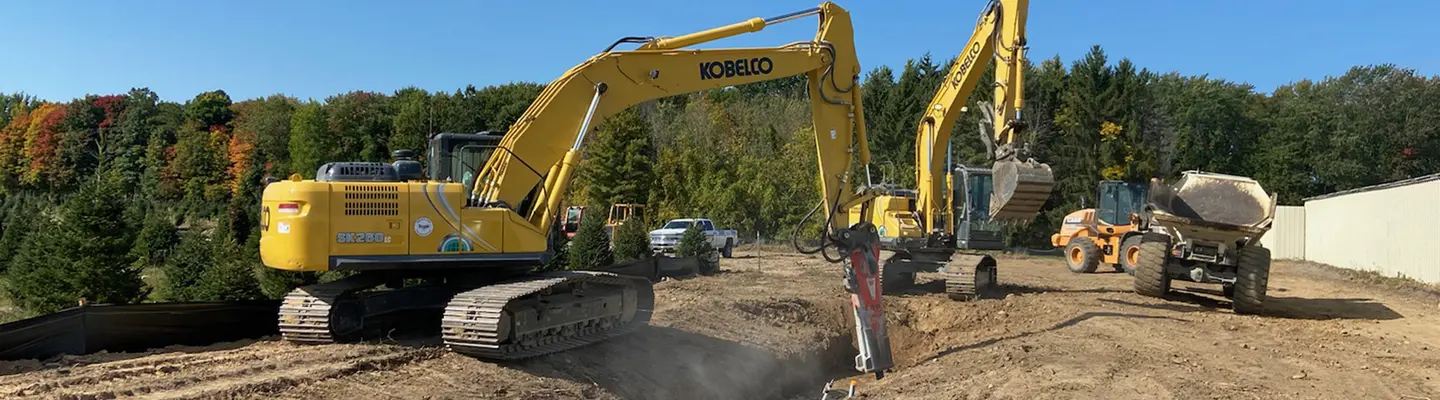
Excavator digging a trench

Benching and Sloping Excavation: Tips and FAQs

Discover the ins and outs of these trench protective systems and when they’re appropriate to use.

April 13, 2026
  • Trench Safety

Article Updated on: October 15, 2026

Protecting people working inside trenches and other excavations against cave-ins is critically important, as many cave-ins are not survivable. Excavation sloping and benching are two old, trustworthy methods, along with the more modern methods of shoring and shielding.

Like all protective systems, they aren't the right choice in every situation, but they have their place. For example, they’re appropriate in certain soil types when shoring or shielding isn’t practical.


What are excavation sloping and benching?

Excavation sloping and benching are two OSHA-recognized methods for protecting workers from trench cave-ins by reshaping the excavation walls rather than installing separate support equipment.

Sloping cuts the excavation walls at an angle away from the trench bottom, while benching cuts the walls into stair-like steps. Both methods rely on soil classification to determine safe dimensions. They work alongside shoring and shielding as OSHA-approved protective systems, and a competent person must confirm which method fits the soil type and site conditions before work begins.


What is excavation benching?

Benching involves excavating the sides of a pit to create benches, which resemble stair steps. When properly designed and used in the right type of soil, these benches reduce the risk of cave-ins.

Benching must be performed in soil that is classified as cohesive Type B or better. It is never permitted in type C soil due to that soil’s lack of cohesion.

Benching systems typically use a series of benches at different elevations along the excavation wall. OSHA benching requirements limit the height of benches and how far to set back each bench from the one below it. These specs are based on the excavation depth and soil type.

The height of each bench depends on the soil. In type B soil, each step can be no taller than 4 feet, and the lowest bench would have to be cut back 8 feet.

What is excavation sloping?

In excavation sloping, the sides of the excavation are cut so they slope away from the bottom of the pit to reduce the risk of a cave-in. OSHA sloping requirements dictate the angle of the slope based on the type of soil. Steeper slopes are possible with stable soils. Wet soils and less stable soils require gentler slopes.

Getting the angle of a sloped excavation right is critical. If the slope is too steep, the sides are more likely to collapse. If it’s more gradual than necessary, the excavation area will be larger than it needs to be and costs will increase.

The maximum allowable slope is expressed as a ratio of horizontal distance to vertical rise (H:V). The OSHA Technical Manual’s excavation section provides ratios for different soil conditions in excavations less than 20 feet deep. The slope should not be steeper than indicated in this chart, courtesy of OSHA.

Soil Types

Height:Depth Ratio

Slope Angle

Stable rock

Vertical

90°

Type A

¾:1

53°

Type B

1:1

45°

Type C

1½ :1

34°

Type A (short-term)

1½ :1

63°

Source: OSHA

Type C soil sloping requires the most gradual slopes because Type C soil is the least stable and lacks cohesion. If it shows cracks or signs that a slide is beginning, the soil is in distress, and the slope must be cut back an additional ½:1.

The maximum allowable slope may need to be decreased if adjacent surface loads or encumbrances such as buildings or heavy equipment are present.

Should I use benching or sloping for my excavation project?

Match your protective system to the soil classification and footprint of your jobsite.

Factor

Benching

Sloping

Method

Cutting stair-step benches into the excavation wall

Cutting a continuous angled wall away from the trench bottom

Soil types

Type B or better (never Type C)

Stable rock, Type A, Type B or Type C, each with its own required angle

Space required

Moderate: depends on bench height and setback

Larger footprint, especially in less stable soil

Visibility for workers

Full 360° visibility with no support structures

Full 360° visibility with no support structures

Best used for

Sites with cohesive soil and limited excavation depth

Sites with open space and equipment already on hand for cutting

Key limitation

Requires precise bench height and setback calculations by soil type

Requires larger excavation area as soil stability decreases

What are the benefits and challenges of excavation sloping and benching?

When used in the right situations and done correctly, sloping and benching can have benefits and also potential drawbacks. The designated competent person for excavation work should be the one to determine the best trench protective system for the project.

Benefits of excavation sloping and benching

Excavation sloping and benching offer several advantages, including:

  • Efficiency: There’s no need to install and remove shoring or shielding equipment.
  • Cost (in some cases): Slopes and benches are usually cut with equipment already on site, and they don’t require renting trench safety equipment. In some applications, including shallower excavations in stable soil, they can be less expensive than other methods.
  • Visibility: The lack of struts and other physical support systems means workers have 360° visibility within the excavation and can move freely.

Potential challenges of excavation sloping and benching

Potential drawbacks of these protective systems include:

  • Space requirements: Benching and sloping require more open space around the excavation than other methods. They are not optimal choices for built-up areas.
  • Cost (in some cases): Moving dirt around a site can be expensive, especially when the costs of fuel and operator time are factored in. For long trenches, they may not be the most economical approach. The removed soil will have to be reinstated and possibly compacted, and doing so can be costly.
  • Timelines: Cutting benches or slopes can sometimes take longer than installing shoring or shielding.

How do you maintain OSHA-compliant trench benching and sloping?

In recent years, OSHA has stepped up inspection of excavations. Violations of OSHA’s excavation standards accounted for 9% of the total penalties the agency issued.

If an OSHA inspector visits a site that uses benching or sloping, they may measure the benches or slope to check whether they comply with OSHA regulations.

To stay compliant and keep workers safe, contractors must:

  • Properly classify the soil to determine whether sloping or benching is appropriate.
  • Cut benches of the required height and horizontal distance. The United Rentals Trench Safety podcast episode on sloping and benching offers in-depth guidance.
  • Slope at the required angle. The United Rentals Trench Safety app features a handy excavation slope calculator.
  • Have the competent person check the excavation protection system for signs of distress every day before work begins and any time conditions may have changed.

Over decades of use, sloping and benching systems have proven effective when properly designed and implemented under the right conditions. A training course offered by United Rentals’ United Academy®, Excavation Safety Training for Competent Persons, can help competent persons understand when these tried-and-true methods are appropriate.


Frequently asked questions

What is the difference between benching and sloping in excavation?

Benching cuts the excavation wall into stair-step levels, while sloping cuts a single continuous angled wall. Benching is limited to Type B soil or better, while sloping can be used across stable rock, Type A, Type B and Type C soil at different required angles.

What soil type is required for excavation benching?

Excavation benching requires cohesive Type B soil or better. Type C soil lacks the cohesion needed for safe benching and is never permitted for this method.

What is the maximum slope allowed for Type C soil?

Type C soil requires a maximum slope ratio of 1½:1, or a 34-degree angle, since it is the least stable and least cohesive soil type under OSHA's classification system.

Are sloping and benching always cheaper than shoring or shielding?

No, sloping and benching are not always cheaper than shoring or shielding. Sloping and benching avoid equipment rental costs but can require more soil removal, reinstatement and compaction, which may increase costs on longer trenches or built-up sites.

For site-specific guidance on trench protective methods, contact the United Rentals Trench Safety team.

  • Facebook Facebook
  • X X
  • Linkedin Linkedin
  • Email Email
  • Print Print
  • Copy Link Copy Link
  • RSS Feed RSS Feed

Was this article helpful?

Yes No

Env: Stage -> Release Tag: builds/github/2026/974-release-3.37.1--2026_10_15_1234

Trending Articles

How to Cut Concrete Using a Concrete Saw
Contractors: Are You Violating OSHA's Portable Toilet Guidelines?
What is a Mini Excavator Used For? Sizes, Applications and Attachments Explained
Wood Chipper Safety: Tips for Avoiding Accidents and Injuries
Locating Pipes with Acoustics and Mapping Software

Related Equipment

Trench Safety & Shoring

Trench Safety & Shoring

Trench Safety & Shoring

Speedshore trench box
  • Facebook
  • Linkedin
  • X
  • Youtube

24/7 Customer Care

844.873.4948

  • Mobile App
    • Download for Android
    • Download for Apple
  • Equipment
    • Rent Equipment
    • Buy Equipment
    • Credit Application
    • Rental Protection Plan
    • United Guard™
    • Download Equipment Catalog
  • Solutions & Services
    • Total Control®
    • Specialty Solutions
    • Industry Solutions
    • Customer Equipment Solutions
    • United Academy
  • Support
    • Find a Location
    • Contact Us
    • Rental Equipment Service
  • About Us
    • Corporate Fact Sheet
    • Corporate Responsibility
    • Our Culture
    • Awards & Recognition
    • Resource Center
  • Careers
    • Early Career & Development
    • Events
    • Military
    • Search Jobs
  • Investor Relations
    • Annual Reports
    • Presentations
  • © 2026 United Rentals, Inc.
  • Legal Terms and Conditions
  • Equipment Directory
  • Branch Directory
  • Cookie Settings
United Rentals Home

User account menu

  • 844.873.4948
  • Australasia

    • Australia

    Europe

    • Français
    • Deutsch
    • English
    • Nederlands

    North America

    • English
    • Español
    • Français
  • Sign In / Register
  • Rent
    • All Equipment
    • Popular Rentals
    • Scissor Lifts
    • Boom Lifts
    • Telehandlers
    • Mini Excavators
    • Skid Steers & Track Loaders
    • Rental Resources
    • Rental Protection Plan (RPP)
    • Why Rent with United Rentals
  • Buy
    • All Used Equipment
    • Popular Used Equipment
    • Buy Forklifts
    • Buy Scissor Lifts
    • Buy Boom Lifts
    • Buy Mini Excavators
    • Buy Compressors
    • Buying Resources
    • Financing
    • United Guard™
  • Total Control
    • Account Dashboard
    • Invoices & Payments
    • Items On Rent
    • UR Mobile App
    • About Total Control®
  • Invoices & Payments
    • Invoices
    • Lien releases
    • Apply for credit
  • Locations
    • Find a Location
  • Training
    • Course Catalog
    • Training Credentials
    • United Academy
    • About United Academy
    • Care & Support
    • United Academy - Course Catalog
  • Solutions
    • Worksite Performance Solutions™
    • Specialty Solutions
      • Commercial Trucks
      • Flooring & Facility Solutions
      • Power & HVAC
      • Climate Solutions
      • Fluid Solutions
      • Trench Safety
      • Reliable Onsite Services
      • Tool Solutions
      • Storage Containers & Mobile Offices
      • Communications
      • Industrial Blinds
    • Power & HVAC
    • Climate Solutions
    • Fluid Solutions
    • Trench Safety
    • Trench Engineered Systems
    • Reliable Onsite Services
    • Tool Solutions
    • Storage Containers & Mobile Offices
    • Temporary Industrial Tents
    • Commercial Trucks
    • Flooring & Facility Solutions
    • Ground Protection Matting Solutions
    • Industry Solutions
      • Energy & Utility
      • Chemical
      • Oil & Gas Refining
      • Oilfield Services
      • Civil and Infrastructure
      • Restoration and Remediation
      • Government Solutions
      • Agriculture
    • Energy & Utility
    • Data Centers
    • Renewable Energy
    • Chemical
    • Oil & Gas Refining
    • Oilfield Services
    • Restoration & Remediation
    • Civil & Infrastructure
    • Government Solutions
    • Events & Entertainment
    • Emergency Solutions
    • Emergency Response
  • Services
    • Digital Solutions
    • Total Control®
    • Mobile App
    • Notifications
    • Benchmarking
    • Wedge
    • Downloadable Catalogs
    • Repair & Maintenance Services
    • Owned Equipment Service
    • Rental Equipment Service
    • Training Services
    • United Academy
  • Safety
    • Safety Training
    • Safety Articles
  • Company
    • Resource Center
    • Events
      • Events Calendar
      • Webinar Series
    • In the News
    • Press Releases
    • Investor Relations
      • Annual Report
      • Reports & Proxy Statements
      • Corporate Governance
      • Investor Press Releases
      • Investor Events, Calls & Presentations
      • Research Coverage
      • SEC Filings
    • Careers
      • Search Careers
      • Career Areas
    • Who We Are
    • About Us
      • About Us
      • Our Culture
      • Board of Directors
      • Corporate Leadership
      • Sponsorships & Partnerships
      • Awards & Recognition
      • Corporate Responsibility Report
      • Small Businesses
    • Safety
    • Sustainability
    • Productivity
    • Innovation